Emmett Fitzpatrick
I Heard You Paint HousesEmmett Fitzpatrick, a former district attorney of Philadelphia, appears in the book as Frank Sheeran’s lawyer and as a legal intermediary during the final stages of Sheeran’s account of Jimmy Hoffa’s disappearance. His role was not to supply the story’s revelations, but to mark the boundary between Sheeran’s statements and the legal consequences they might carry.
Background and Early Contact
After Sheeran returned from the war, his mother arranged a possible place for him in the Pennsylvania State Police. He declined to pursue it. Years later, when Sheeran told Fitzpatrick about the opportunity, Fitzpatrick remarked on the kind of police officer he might have become. Sheeran answered with a sardonic suggestion that such a career would have involved taking settlements rather than making arrests. The exchange gives their relationship a glimpse of ease and dark humor, even as it reflects Sheeran’s refusal of conventional authority.
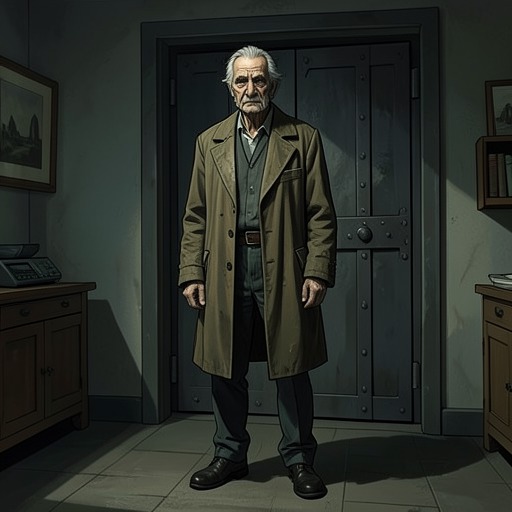
By the time federal agents approached Sheeran in October 2001, Fitzpatrick was his counsel. The agents came to Sheeran’s apartment hoping that age might have softened his resistance and that he might give a deathbed confession. Sheeran, then in his eighties and using a walker, directed them to Fitzpatrick instead. The gesture repeated a response he had made since Hoffa disappeared: he would not discuss the case with investigators without going through his lawyer.
Counsel During the Interviews
Fitzpatrick’s office became the setting for a meeting that reopened the book’s interview process. After Sheeran had received absolution from a priest in 1999, he contacted the interviewer and asked him to attend a meeting at his lawyer’s office. There Sheeran agreed to submit to questioning, and the interviews resumed for four more years. Fitzpatrick is identified as the lawyer whose office hosted this turning point; the account does not assign him the interviewer’s role or the questions that elicited Sheeran’s statements.
The distinction between a personal confession and a legally usable confession remained important throughout the work. The interviewer describes efforts to protect Sheeran’s rights so that his statements would not constitute admissible evidence in court. The book does not say that Fitzpatrick directed those precautions, but his continuing place as Sheeran’s counsel frames the legal care surrounding the interviews.
Public Disclosure and Final Confirmation
About two years into the renewed interviews, the interviewer arranged a meeting at Fitzpatrick’s office with Fox News correspondent Eric Shawn and producer Kendall Hagan. The plan was to give Sheeran one correspondent he could trust and to create a setting in which he could say, for the first time to someone beyond the interviewer, that he had shot Hoffa. Sheeran had already admitted the shooting in the private interview process; this meeting was intended to carry the claim into public view. He gave directions to the house and described shooting Hoffa twice in the back of the head.
Fitzpatrick also spoke with Sheeran by telephone before Sheeran chose to go on videotape and stand behind the book’s account, including its description of what happened to Hoffa on July 30, 1975. The account does not disclose what Fitzpatrick said during that call. It establishes instead that Sheeran spoke with his lawyer before making the decision to endorse the material publicly, at a time when illness had left him severely weakened.
Narrative Role
Fitzpatrick’s appearances trace the passage from private recollection to public assertion: Sheeran refers federal agents to counsel, agrees to renewed questioning at his lawyer’s office, meets a television team there, and consults his lawyer before recording a final endorsement. The book gives Fitzpatrick no independent account of the Hoffa case and attributes no confession or investigative discovery to him. His significance lies in the threshold he represents, where Sheeran’s long-protected statements approach an explicit public commitment.